Master your mind and take control of your reactions. Learn emotional sovereignty, mental clarity, and how to resist manipulation, urgency, and psychological pressure in a world designed to influence you.
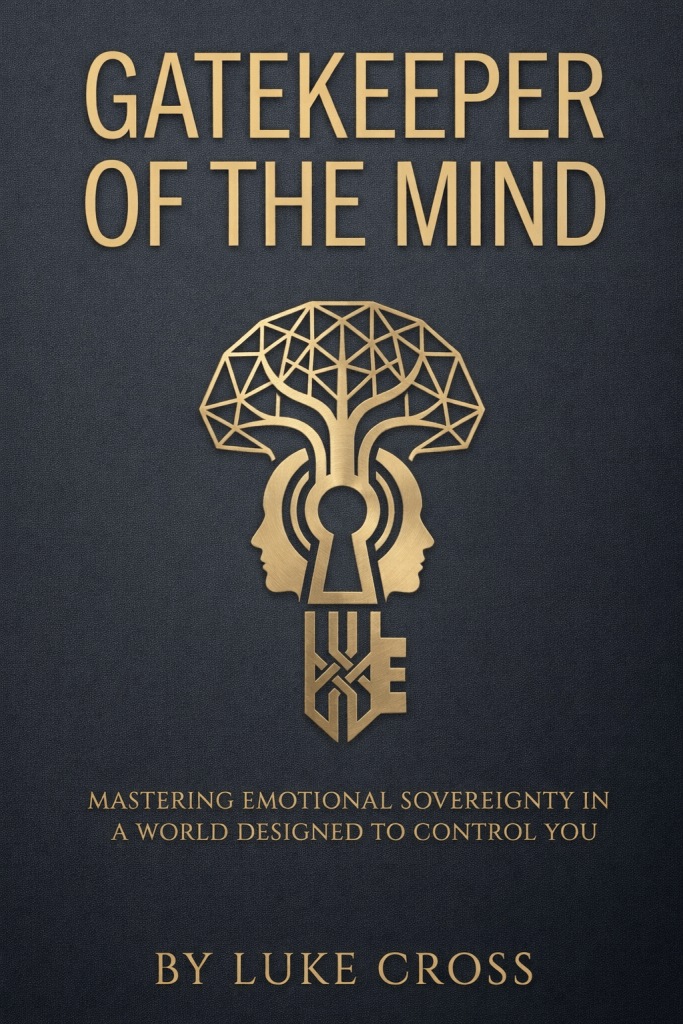
Frequently Asked Questions (FAQ)
What does “Gatekeeper of the Mind” mean?
The Gatekeeper of the Mind is the ability to consciously decide what thoughts, emotions, and external influences are allowed to enter your mental space. It means you no longer react automatically—you observe, evaluate, and choose your response.
What is mental sovereignty?
Mental sovereignty is the ability to govern your internal state independently of external pressure. It means you control your reactions, attention, and decisions instead of being influenced by urgency, emotion, or manipulation.
How does psychological manipulation actually work?
Manipulation works by triggering emotional states such as urgency, guilt, fear, or excitement. These states alter your thinking and lead to predictable reactions. The sequence is: stimulus → emotional activation → reaction.
Why do intelligent people still get manipulated?
Intelligence does not protect against emotional triggers. In fact, intelligent people often rationalize their reactions after the emotion has already influenced them, making the manipulation less visible but equally effective.
What is the “Mule archetype” in psychology?
The Mule archetype represents a form of control that does not rely on force but on emotional influence. Instead of changing what you think, it changes how you feel—and your decisions follow.
What are the main psychological “gates” of the mind?
The most common entry points for influence are:
- Guilt (sense of responsibility)
- Urgency (pressure to act quickly)
- Competence (need to prove yourself)
- Recognition (desire for validation)
- Opportunity (fear of missing out)
What is the illusion of urgency?
The illusion of urgency is the false feeling that something must be handled immediately. It compresses thinking and removes clarity, leading to fast but often suboptimal decisions.
How can I stop reacting emotionally?
The key is to introduce a pause between feeling and action. Observe the emotion without acting on it immediately. This creates distance and allows rational decision-making to return.
Why is delay such a powerful strategy?
Delay reduces emotional intensity and restores clarity. Manipulation depends on speed. When you delay your response, you break the sequence of control and regain autonomy.
What does it mean to “observe” your thoughts?
Observation means noticing thoughts and emotions without identifying with them or reacting immediately. Instead of saying “I am angry,” you recognize “anger is present.”
What is emotional sovereignty in daily life?
It means not reacting immediately to messages, criticism, or pressure. You take time to evaluate, verify, and respond only when you are clear and stable.
How do algorithms influence human behavior?
Algorithms learn your reactions—what you click, how long you engage, what triggers emotion—and then deliver more of the same stimuli to guide your behavior predictably.
What is the difference between reacting and choosing?
Reacting is automatic and driven by emotion. Choosing is deliberate and happens after awareness and evaluation. The difference is a brief moment of observation and delay.
What does “inaccessibility as strength” mean?
It means not giving automatic access to your attention, emotions, or reactions. You decide what deserves engagement instead of responding to every stimulus.
Can you eliminate emotional influence completely?
No. Emotional influence cannot be eliminated, but it can be controlled. The goal is not to stop feeling but to stop reacting automatically to those feelings.
What are the core principles of the sovereign mind?
The sovereign mind operates on three principles:
- Awareness – recognizing thoughts and emotions
- Delay – not reacting immediately
- Selection – choosing what becomes action
How do you know if something is truly urgent?
True urgency remains after delay and becomes clearer with verification. False urgency fades once emotional pressure decreases.
Why is controlling attention so important?
Attention determines what influences your thoughts, emotions, and decisions. What you repeatedly focus on shapes your mental environment and behavior.
What is the biggest mistake people make in high-pressure situations?
The biggest mistake is reacting too quickly under emotional pressure, which leads to reduced clarity, poor decisions, and increased vulnerability to manipulation.
What is the ultimate goal of this system?
The goal is to become the Gatekeeper of your mind—to decide what enters, what stays, and what becomes action, achieving true psychological independence.
 100BooksProject.com